
At-Home Dog Dental Care: Brushing, Chews & Daily Tips
At-home dog dental care is one of the most valuable things you can do for your pet’s long-term health between professional veterinary cleanings. The gold standard of at-home dog dental care is daily tooth brushing, but there are also several veterinary-approved products, including dental chews and water additives, that can support your dog’s oral health as part of a consistent routine. However, no product will replace the need for daily brushing. Starting early, staying consistent, and choosing the right products makes a real difference in the amount of disease that develops between professional cleanings.
At Houston Pet Dental in Spring, Texas, our team often gets asked what pet owners can do at home to support their dog’s oral health. Here is a practical, evidence-based guide to building a daily routine that works.
Why At-Home Dog Dental Care Matters
Plaque, the sticky bacterial film that forms on teeth, begins accumulating within hours of eating. If plaque is not removed, it mineralizes into tartar (calculus) within days. Once tartar forms, it cannot be removed by brushing at home and requires a professional dental cleaning to address. The purpose of at-home dog dental care is to disrupt and remove plaque before it has a chance to harden into tartar, slowing the progression of periodontal disease and reducing the amount of work needed at each professional cleaning.
At-home dental care does not replace professional cleanings. It is a powerful complement to them. Dogs that receive consistent at-home care between professional cleanings tend to have healthier gums, slower disease progression, and better overall oral health outcomes.
Brushing Your Dog’s Teeth at Home
Daily tooth brushing is the most effective form of at-home dog dental care. Research consistently supports brushing as the single best method for removing plaque and reducing the risk of periodontal disease in dogs. Even brushing three to four times per week is significantly more beneficial than no brushing at all, though daily is the goal.
What You Need to Brush Your Dog’s Teeth
Use a toothbrush designed for pets or a soft-bristled human toothbrush with a small head. A finger brush can work well for dogs who are sensitive about having something unfamiliar in their mouths. Always use a toothpaste formulated specifically for dogs. Human toothpaste contains fluoride and xylitol, both of which are toxic to dogs and must never be used.
Pet toothpastes come in flavors dogs tend to enjoy, such as poultry, beef, and peanut butter. Finding a flavor your dog likes makes the brushing process much easier and can turn it into something your dog anticipates rather than dreads.
How to Get Your Dog Used to Tooth Brushing
Introducing tooth brushing gradually and positively is the key to making it a sustainable habit. Start by simply letting your dog lick the toothpaste from your finger, then progress to touching the teeth and gums with your finger before introducing the brush. Go slowly, keep sessions short, and pair every step with calm praise and positive reinforcement. Dogs who are introduced to brushing as puppies adapt most easily, but most adult dogs can learn to tolerate and even enjoy brushing with patience and a consistent approach.
Dental Chews for Dogs: What Works and What Doesn’t
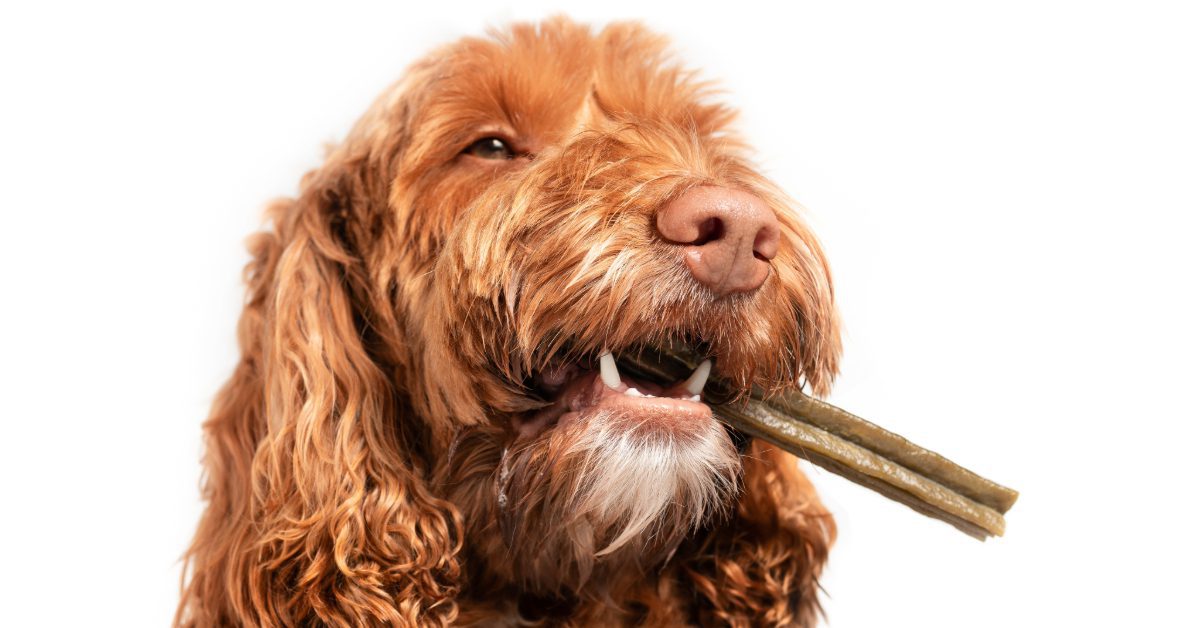
Dental chews are a popular and convenient component of at-home dog dental care, but not all products are equally effective. When choosing dental chews, look for the Veterinary Oral Health Council (VOHC) seal of acceptance. Products with the VOHC seal have been independently tested and proven to reduce plaque or tartar accumulation by at least 10% compared to no treatment. This seal is the most reliable indicator of a dental chew’s effectiveness.
Dental chews work by mechanically abrading the tooth surface as the dog chews, which helps disrupt plaque. They are most effective on the outer surfaces of the back teeth, which is where the majority of plaque and tartar tend to accumulate. They are not able to clean below the gumline.
Are Dental Chews Safe for Dogs?
Dental chews are generally safe when used as directed and selected carefully. Avoid chews that are excessively hard, such as nylon bones, antlers, or real bones. The general rule is that if a chew does not indent when you press your thumbnail into it, it is too hard and can fracture your dog’s teeth. Fractured teeth are one of the most common dental injuries veterinary teams see, and many of them result from chewing objects that are too hard. Always supervise your dog with dental chews and select a size appropriate for your dog’s weight and chewing habits.
Other At-Home Dog Dental Care Products
In addition to brushing and dental chews, several other products can support your dog’s oral health as part of a daily routine. As with dental chews, look for the VOHC seal when evaluating these options.
- Dental water additives: These are added to your dog’s drinking water and contain antimicrobial ingredients that help reduce bacteria in the mouth. They are easy to use and well-tolerated by most dogs, though effectiveness varies and they should not replace brushing.
- Dental wipes and pads: These are useful for dogs who resist a toothbrush. They can wipe away some surface plaque but are less effective than brushing because they do not reach between the teeth or below the gumline.
- Dental diets: Certain prescription dental diets are formulated with kibble that has a specific texture and size designed to scrub the tooth surface as the dog chews. These have VOHC approval and can be effective for dogs that eat kibble.
- Oral gels and sprays: These products contain antimicrobial enzymes that help reduce bacteria and plaque. They are applied directly to the teeth and gums and are a reasonable option for dogs that resist brushing.
What Not to Use for Dog Dental Care at Home
Knowing what to avoid is just as important as knowing what works. The following are products and practices that our team at Houston Pet Dental advises against:
- Human toothpaste as it contains fluoride and potentially xylitol, both toxic to dogs
- Very hard chews such as antlers, bones, and hard nylon toys that can fracture teeth
- Baking soda as a substitute toothpaste, which can cause gastrointestinal upset
- Dental products without VOHC approval that make claims not backed by independent testing
Building a Daily At-Home Dental Routine for Your Dog
The most effective at-home dog dental care routine combines daily brushing with one or two additional VOHC-approved products that fit your dog’s preferences and your lifestyle. Consistency is far more important than perfection. A daily routine that you can realistically maintain will do far more for your dog’s oral health than an elaborate routine that gets abandoned after a week.
Think of at-home dental care as the daily maintenance that protects your investment between professional cleanings. It slows the accumulation of disease, helps you notice changes in your dog’s mouth sooner, and means that professional cleanings are more straightforward and less expensive over time.
At-Home Care and Professional Cleanings Work Together
At-home dog dental care is a critical part of a complete oral health strategy, but it works best when paired with regular professional veterinary dental cleanings. No matter how consistent your home routine is, it cannot clean below the gumline, detect disease through dental radiographs, or address problems that have already developed. Professional cleanings and daily at-home care are complementary, not interchangeable.
If you have questions about which at-home dental care products are right for your dog, or if your dog is due for a professional cleaning, call our team at Houston Pet Dental at 832-702-7599. We are happy to walk you through the options and help you build a routine that fits your dog’s needs and your schedule.
Recent Posts
About Us
Houston Pet Dental aims to provide affordable, high-end veterinary dental care for dogs and cats in the Houston, TX area. Contact us today or walk in for a complimentary consultation!